
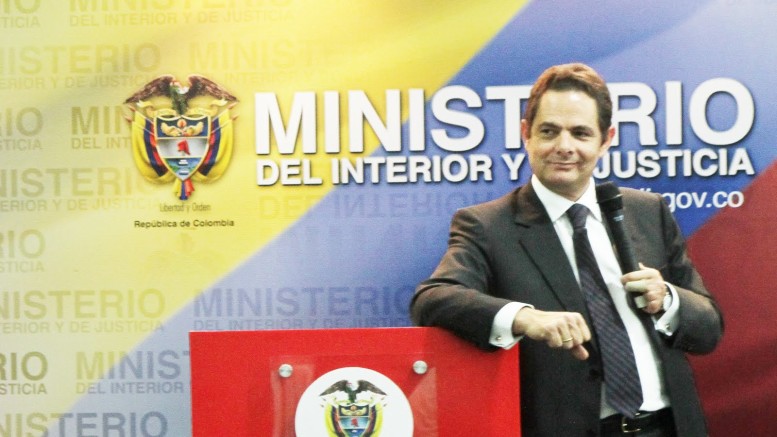
German Vargas Lleras is Vice President of Colombia and prospective candidate in the upcoming presidential elections. Vargas Lleras is a highly visible and fast rising politician with the requisite connections, elite origins, diverse experience and endurance to go further, but not without confronting a contradictory past.
LAT AM POWER WATCH PROFILE provides comprehensive analytical assessments beyond average singular open sources on rising Latin American political authorities. It strives to combine information and leadership analysis able to be succinctly comprehended and practically applied to profiling, crisis management, negotiation and other strategic utilizations.
CONTENTS:
- - Synopsis
- - Summary
- - Quick Facts
- - In Depth Notes
- - Trajectory and Assessments
SYNOPSIS
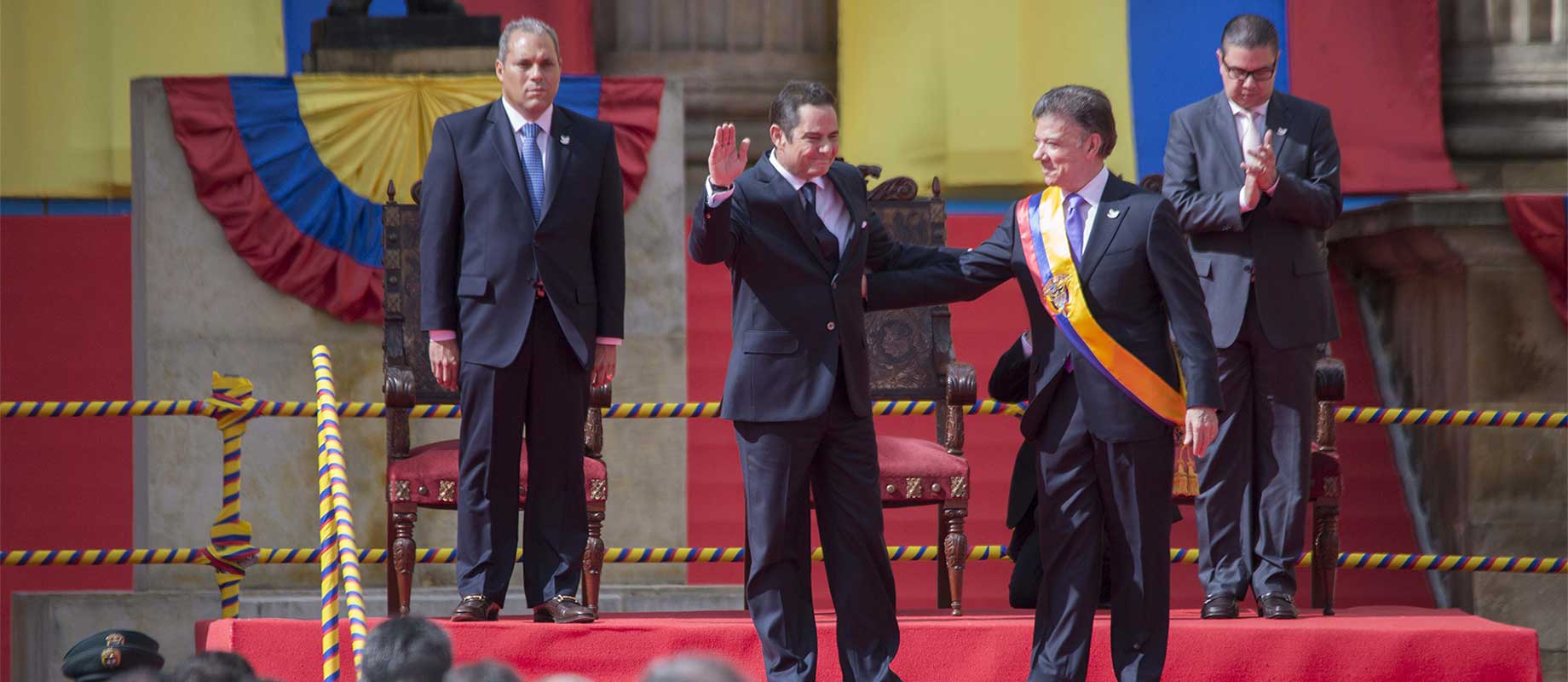
Santos may understand that in supporting Vargas Lleras, he runs the risk of being served his own medicine. Photo (c) Historico VP Gov Colombia 2014
Vargas Lleras must harness daring psychological profile for negotiation leveraging in order to not burn bridges. Balance of extremities and burying past stereotypes of convenient alliance hopping is key, least decades-worth of carefully procured prospects could fall hard and fast. He must build sociological marketing appeal to populous voters and media via increasing charisma and rationalizing past conflicts. Curiously, he has kept out of major scandals, regardless of occasionally public and private rubbing former allies the wrong way. Health has also been of concern, but this is publically denied.
Santos may understand that in supporting Vargas Lleras, he runs the risk of being served his own medicine - supporting a candidate in exchange for continuation of former administration policies, only to have utilization expired upon assuming office (see Uribe-Santos 2010 electoral dynamic). Vargas Lleras has progressively diplomaticized his past radical profile, apparently and partially in order to dissuade such concerns, or perhaps simply for implicit health concerns.
However, he may be up against not only other ex-Vice President and FARC-GOVT peace negotiator Humberto de la Calle, but also still influential Uribista candidate, potentially Oscar Ivan Zuluaga again. Vargas Lleras’ risk-taking negotiation talent and skillful maintenance of cross-industry contacts (i.e.: nation-wide private sectors with brothers, elite networking with family, Santos peace process appeal, Ministry of Living populous appeal, Ministry of Interior successful lawmaking track, association with legendary Galan and grandfather ex-President Lleras, leadership of Cambio Radical, etc…) may give him a local campaign marketability edge over more past and international appealing de la Calle.
SUMMARY
Public Ideological Association: Center-Right Photo (c) Publimetro Colombia 2016
- Who: German Vargas Lleras
- What: Current Vice President of Colombia; potential candidate for upcoming presidential elections; highly vocal; medium-sized political party head; member of elite family
- Where: Bogota, Colombia (work). Bogota, Colombia (traditional familial territory)
- When: 1980s-present day
- Why: Highly strategic, networked and tenacious politician with a successful climbing-the-political-ladder track record despite past alliance conflicts, failed run for presidency, health issues and stereotype of radical behavior.
- Age: 19, February 1962
- Political Party: Cambio Radical / Partido de la U (current); Liberal Party (past)
- Public Ideological Association: Center-Right
- Religion: Catholic
- Profession: Politician; Lawyer
- Education: Georgetown University (preparatory), Universidad del Rosario (law), Universidad Complutense de Madrid (PhD in Government and Public Administration),
- Positions: Nuevo Liberalism council (1981); Political Coordinator in Los Martires, Bogota for Luis Carlos Galan (cerca 1980s); Council of Bogota (1988, 1990-1994); Personal Secretary of Minister of Agriculture (1989); Liberal Party official membership (cerca 1989); Senator (1998-2008); President of the Senate (2003-2004); Minister of Interior (2010-2012); Minister of Living, City and Territory (2012-2013); Vice President (2014-present).
- Family:
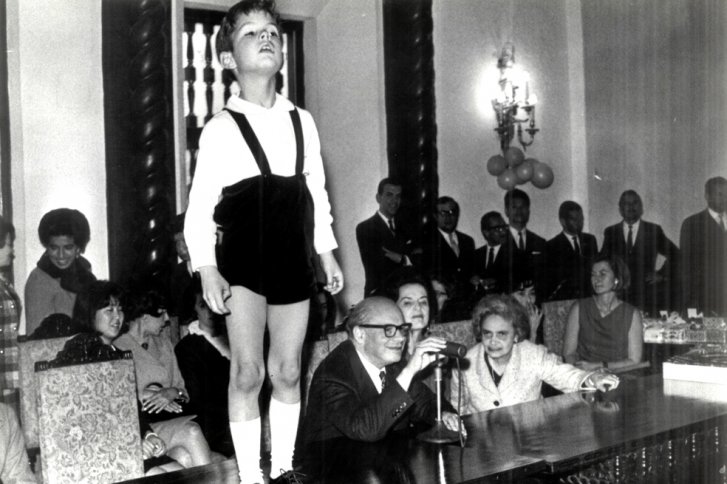
Young German on grandfather President Lleras’ table mid-speech in the Casa Narino. Photo (c) El Espectador 2016
- Carlos Lleras Restrepo (grandfather - ex-President)
- Jose Antonio Vargas LLeras (brother - commercial and public utilities lawyer; mining and energy sector mogul; Chairman of Audit Committee and Member of Good Governance & Evaluation Committee; Head of the Colombia Committee of the World Energy Council; Ambassador of Colombia to the European Union in Brussels and Secretary General o the Presidency of the Republic of Colombia)
- Enrique Vargas Lleras (brother - commerical and political lawyer; energy and health mogul; Junta Director of Business Camara of bogota, ex-candidate of Mayor of Bogota; business owner in Panama, and General Director of Vargas Abogados & CIA Ltda).
- Luz Maria Zapata (wife - political scientist, ex-TV reporter, union leader)
- Maria Beatriz Umana Sierra (ex-wife; mother of only daughter)
- Clemencia Vargas Umana (daughter - business administration student in US and professional dancer)
- German Vargas Espinosa (father - businessman)
- Clemencia Lleras de la Fuente (daughter of ex-President Carlos Lleras Restrepo)
IN-DEPTH NOTES
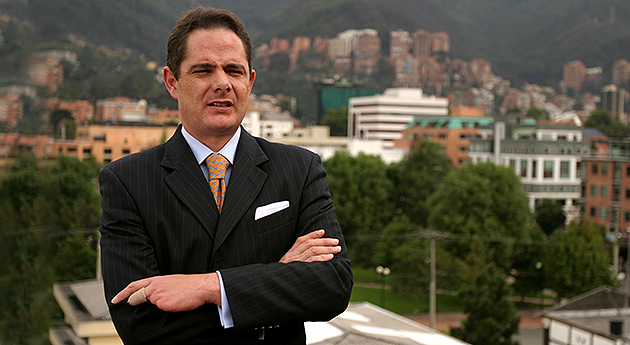
Vargas Lleras has been known for a tenacious policy drive, stubborn stance and frequently vehement debating style. Photo (c) Semana 2014
- Formative Years:
Member of traditional political families Vargas and Lleras. Grandson of President Carlos Lleras Restrepo. Grew up roaming Casa Narino with other elite-born cousins and Minister children, including climbing on tables mid-cabinet meetings. Sports include horsemanship, yachting, tennis, scuba diving and chicken fighting. Elite schools. Parents married. US-Spain-Colombia education - characteristic of upper class, where he gained proficient English. Lawyer but never practiced, unlike brothers. PhD level . International travels from early age. Married current wife in Miami.
- Major Public Allies:
Luis Carlos Galan (1970s-80s; deceased), Cesar Gaviria (1980s-), Alvaro Uribe (2000s), Juan Manuel Santos (2010s-).
- Psychology:
Vargas Lleras has been known for a tenacious policy drive, stubborn stance and frequently vehement debating style. Both elements have won and lost numerous powerful alliances, gaining positions while losing elections - re-affirming that Vargas Lleras - like Santos - is somewhat more skilled at insider networking, getting appointed and negotiation than pure grass-roots popular appeal. He has stood up to certain individuals in private, risking his current positions for prospects of higher ones. He has also had a mixed history of being his own boss of medium-sized entities even when offered to be a follower of a larger entity, and being a follower who demonstrates lapses of deciding key factors for himself even when this ultimately gets him in trouble with leadership. Switching at times polar public associations for strategic rising purposes is a reoccurring characteristic. Since assuming the vice presidency in 2014, Vargas Lleras has toned down the vehement profile - perhaps a dual-result of health complications, riding out Santos approval rating lows but most of all the prospects of being chosen as established, peace-process creditted Santos’ favorite candidate for the upcoming presidential elections.
- Strategy: Pathos:
Vargas Lleras presents himself as a staunch advocate and fearless watch dog against opposition and allies to-become opposition.
- Strategy: Ethos:
Vargas Lleras is willing to engage in high-risk negotiations in the name of being his own leader and rising the national political ladder. While he has been known for vocal, at times crude oral style, when it comes to crisis management, Vargas Lleras also maintains the traditional elite maturity and understanding of the importance of behind-closed doors talks.
- Strategy: Logos:
Vargas Lleras has presented at times contradictory policy stances, particularly when supporting certain movements under one administration of less luck , then supporting similar movements under another administration with more luck. Change rate is so far at approximately 10-year intervals. However, Vargas Lleras has remained fairly loyal to “radical” political alternatives at least for the past two decades, having moved from traditional liberal family origins, to modern liberal-tendency Galan, to the independent neo-liberal and later conservative tendency of mid-career Uribe, and the center- right of Santos.
- Opposition “Street Cred”:
Opposition accuses Vargas Lleras as a career turn coat with psychologically radical tendencies. In office opposition has been accused of setting off bomb attempts against Vargas Lleras, specifically during alliance transition periods. Most current VL opposition was at one time an ally.
- Pro “Street Cred”:
Supporters define Vargas Lleras as a staunch advocate for supported policies, with a pitbull-like fearlessness against small or large opposition indiscriminately. Supporters cite his varied public policy past as contributing to the cross-topic fluency demonstrated as vice president and pre-presidential candidate.
TRAJECTORY and ASSESSMENTS
- Galan and Gaviria Era:
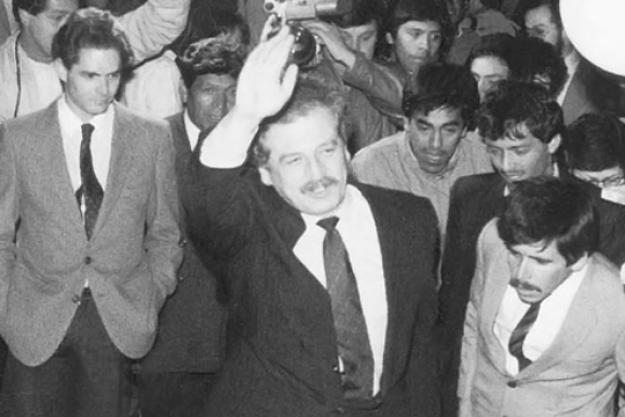
By Galan’s assassination, Vargas Lleras was entering national administrative scene as private secretary of Agriculture Ministry under President Cesar Gaviria. Photo (c) 90 Minutos 2016
Enters political world beyond solely blood (i.e.: Ex-President Carlos Lleras Restrepo) at early age. Gets elected local council at 19 years old. Mentored personally by Luis Carlos Galan - pro-drug lord extradition, populous appealing presidential candidate to be assassinated. Spends a decade back-and-forth between receiving higher level education and local legislation.
By the time of Galan’s assassination, Vargas Lleras is entering national administrative scene as private secretary of Agriculture Ministry under President Cesar Gaviria, ex-vice presidential candidate for Galan and thus successor in the race. Little spoken, Gaviria is the maternal cousin of Pablo Escobar, whom Galan was a vehement public oppositor. Galan utilizes populist charisma and appeal to reign in mass support. Medellin Cartel assassinates Galan. Gaviria takes his place, buying time for Escobar while serving as an official front and bridge between powerful remnant Galan supporters, the US government / DEA and the fading-out Medellin Cartel as its Escobar-era system dies and its transforms into the subtle, although equally deadly paramilitaries and modern Black Eagles.
Meanwhile, Vargas Lleras also begins to demonstrate strategy and alliance balancing, gaining an intimate understanding that no one is immortal and nothing is forever.
- Senate Origins:
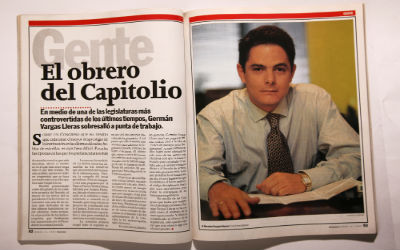
Vargas Lleras allies himself with alternative, power growing movement against struggling out-going Pastrana, also an elite blood. Photo (c) Semana 2012
In the senate, young Vargas Lleras solidifies profile as a tenacious, pathos and ethos-emphasizing lawmaker and officializes himself as opposition to Conservative President Andres Pastrana, whose peace negotiation attempts with the FARC were on the demise. Vargas Lleras allies himself with alternative, power growing movement against struggling out-going Pastrana, also an elite blood and son of ex-President Misael Pastrana. Vargas Lleras pushes debate revealing FARC human rights, drug trafficking, illegal bunker construction, terrorist training camps and territorial abuses in face of Pastrana counter efforts. Allies himself with pro-victims movements who also believe Pastrana’s efforts to be decreasing in affectivity.
Vargas Lleras’ highly vocal opposition stance against FARC-governemnt peace efforts quickly associate him with Medellin governor, second hand FARC victim and also maternal cousin-once-removed from Escobar - and paternal member of business class elite - , future president Alvaro Uribe.
- Pro-Tempore Uribe Alliance:
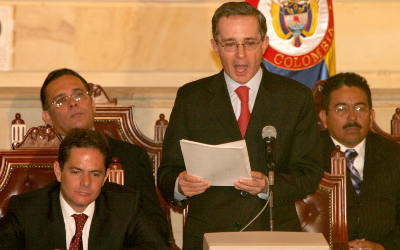
When certain Uribista allies began loosing key positions, Vargas Lleras again balanced strategic associations and joined the Cambio Radical party. Photo (c) Semana 2012
Vargas Lleras rises further through the ranks while supporting Uribe’s 2002 presidential campaign, leaving the Liberal party and helping solidify Radical and Independent political, business and media network behind new national star Uribe.
That same year, Vargas Lleras was elected to the Senate for the third time. Still distanced from the Liberal party, Vargas Lleras joins / creates his first of several alternative medium-sized political movements, bringing associates with him. He coincidentally becomes the youngest politician to be voted for the position in history. Soon after, he survivs a package bomb suspectedly put off by opposition, where he lost facial skin and two and a half fingers. He returns as an even higher profile politician, but more neutral on the Uribista front.
When certain Uribista allies began loosing key positions - particularly Juan Lozano, top long time personal adviser to Uribe, who lost the Mayor of Bogota election, widely considered to be the second most powerful position in the country - , Vargas Lleras diversifies network and joins the Cambio Radical party. Within months, he is named director and president of the party. The party becomes known as one of the most vocal Uribista movements in Congress.
- First Santos Proposal, Senate Successes, and Uribe Distancing:
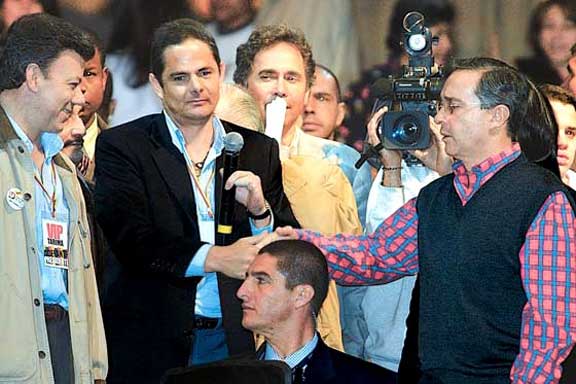
Santos publically invited Vargas Lleras to join the U, which grew faster and larger than Radical. Photo (c) El Pais 2010
Meanwhile, another US-educated elite son is following a similar tactic, although without public office. Juan Manuel Santos - journalist and businessman with influential political ties - had also created an Uribista party - the Partido de la U.
Also searching for mutually beneficial networking - specifically in gaining an electoral majority - Santos publically invites Vargas Lleras to join the U, which is growing faster and larger than Radical. Concerned that joining another party would forfeit his leadership position, Vargas Lleras declines, stating that the parties supported a similar figure head, but are ideologically distinct - center-right vs center right radical. Soon after, the Partido de la U is accused of paramilitary connections in a wave of anti-Uribe scandal allegations.
Vargas Lleras survives another bomb attack. Vargas Lleras is not physically harmed this time, unlike his bodyguards. The attack corner-stone confronts the senator with President Uribe because he attributes the fact to the FARC, without paying attention to information that had the Senator pointing to a possible alliance of politicians and paramilitaries. This process has not yet concluded prosecution investigation, but the fact is that the attack occurred at a time when Senator Vargas Lleras in Congress denounced the criminal alliance between paramilitaries, politicians and drug trafficking.
- Cambio Radical, Lawmaking and Semi-Retirement:
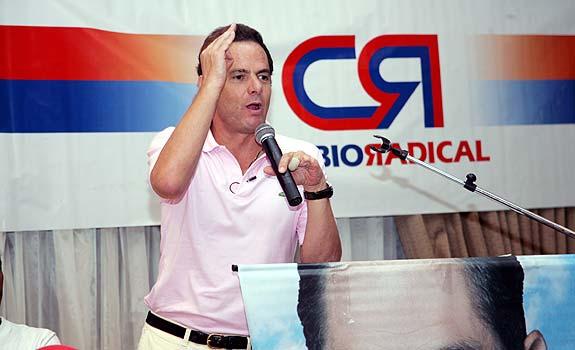
Cambio Radical became a political alternative and finally won a stackhold in la Camara. Photo (c) Confidencial Colombia 2010
In 2006, Cambio Radical becomes a political alternative and finally wins a stackhold in la Camara. Vargas Lleras polls in third. During these periods, he handles various legislative initiatives of importance to the country, including the Legislative Act which restored the military courts, which typifies crimes such as enforced disappearance, genocide, forced displacement and slaughter. He promptes the Anti-Corruption Statute, the Single Disciplinary Code, the project that revives the Extradition and allowing expropriation by administrative authority. All of these are already laws of the Republic and provided important tools to the Colombian government that have been key in the - at least public - fight against criminal organizations.
In early 2008, Vargas Lleras retires temporarily from Senate to advance studies in Europe, but soon returns as senate alliances and successes go sour in his absence.
- 2010 Presidential Elections and Santos Adoption:
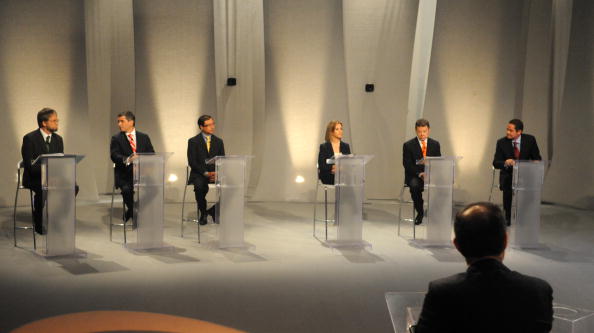
Vargas Lleras further contested Uribe as an ex-ally by declaring himself pro-Uribe policies, without Uribe in office. Photo (c) Getty Images 2010
Vargas Lleras ran in the 2010 presidential elections, coming in third behind center-leftist ex-Bogota Mayor and academic Antanas Mockus, and Uribista ex-Defense Minister and current President Juan Manuel Santos. At the time, Vargas Lleras’ numerous, mutli-layered confrontations alienate his movement from former and now even more powerful associates Uribe and Santos. Vargas Lleras also announces his candidacy despite hearsay of Uribe’s attempt to run for a third period. Vargas Lleras further contests Uribe as an ex-ally by declaring himself pro-Uribe policies, without Uribe in office.
This ultimately allies him with former opposition candidate Santos, who was Uribe’s preferred successor but rebelled immediately by discussing peace negotiation possibilities with the FARC and leftist neighboring countries, Venezuela and Ecuador - countries of which as Defense Minister, Santos advised bombings and denounced as “dictatorships”. Regardless of former antagonism to FARC peace process and refusing Santos alliance in the Senate, Uribe’s in-office influence was waning and Vargas Lleras allies with those in office. This lands him Minister of Interior and Justice for two years.
- Ministry Positions Under Santos:
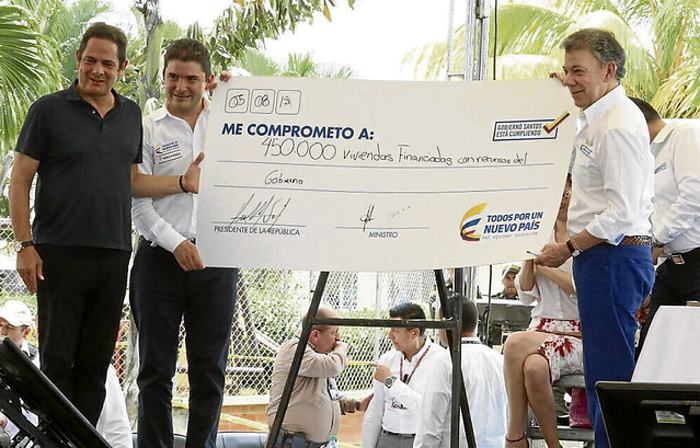
Vargas Lleras began making policy speeches that proposed Ministry-wide decisions without Santos and other cabinet member approval, Santos began subtly warning Vargas Lleras to keep in line. Photo (c) El Universal 2015
Meanwhile, Vargas Lleras divides the new Ministry of Justice from Interior - which removes vehement Uribista Prosecutor Alejandro Ordonez from power over Vargas Lleras’ Interior affairs. Vargas Lleras also pens the Ley Lleras - a law dedicated to investigating digital identity and content theft, one of the Uribe administrations multiple criminal accusations. He also promotes the Ley de Victimas y Restitucion de Tierras - a policy package advocating support of civil war-victims - thus proving to Santos his adjusted public stance for pro-Santos peace agenda above pro-Uribe war agenda.
When Vargas Lleras begins making policy speeches that proposed Ministry-wide decisions without Santos and other cabinet member approval, Santos begins subtly warning Vargas Lleras to keep in line. Vargas Lleras has still maintained leadership of semi-opposition party Cambio Radical, regardless of serving under Partido de la U President Santos. Vargas Lleras quips that with or without place in the administration, he would remain on the political field and take all initiatives and allies with him. Word began leaking that this would involve running against Santos, who at the time was experiencing a brief fall in approval ratings thanks to slowed beginning of proposed Peace Process, protest cracking downs, troubled juggling of US-Pink Tide relations, Bogota highway construction contract issues and public housing funding problems. Santos and Vargas Lleras reportedly had a private three hour negotiation session.
Soon after, Vargas Lleras is appointed Minister of Living, where he could oversee and vow to push the public housing and water into motion. Vargas Lleras appears to recognize to close call and began dedicating the majority of his public appearances and mouth work from alliance opposition to increasing investments, attempting to prove Santos’ standards even at a technically less influential cabinet position.
- Alliance Re-Negotiation and 2014 Presidential Elections:
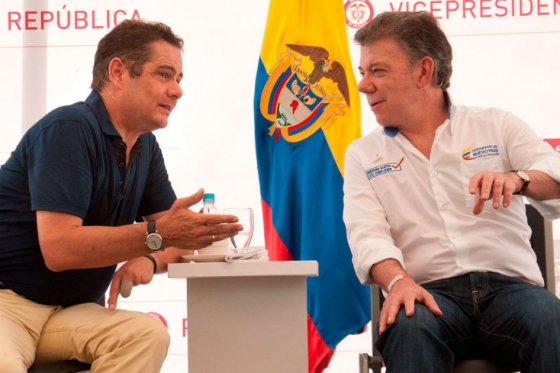
Santos and Vargas Lleras managed to gain an edge on anti-FARC peace process Zuluaga and Uribe by marketing themselves as pro-peace to remaining leftist candidates and their following. Photo (c) El Espectador 2014
In 2013, medium and heavy-weight politicians begin preparing presidential campaigns for the 2014 elections. With the public housing and municipal water works projects moving forward but with continued issues, as well as apparently feeling the lesser influence of the position compared to pasts in the Ministry of Interior and Senate, information begins being leaked regarding Vargas Lleras’ proposal to resign and return fully to his Cambio Radical as opposition candidate to Santos, who was publically still ambiguous on whether to pass a no-second-re-election law, or run for a second term himself.
As Uribe slowly introduces Oscar Ivan Zuluaga as his favorite opposition candidate, Santos arranges another meeting with Vargas Lleras, this time on Vargas Lleras’ territory at the Cambio Radical Bogota headquarters during lunch hour. Sub sequentially, Santos announces that he would be running for president. He drops health and incoherent-policy troubled ex-union leader, ex-guerilla, ex-Labor Minister, ex-Valle de Cauca Governor, ex-Colombia Ambassador to the UN in Switzerland and Vice President Angelino Garzon - who he instead personally recommended to head the Organizacion Internacional del Trabajo (OIT), and positioned Vargas Lleras as Vice President.
Santos and Vargas Lleras manage to gain an edge on anti-FARC peace process Zuluaga and Uribe by marketing themselves as pro-peace to remaining leftist candidates and their following as the alternative to war and 2008 diplomatic crisis days during the second round, the first of which Zuluaga won by a small margin. Santos and Vargas Lleras win.
- Vice Presidency
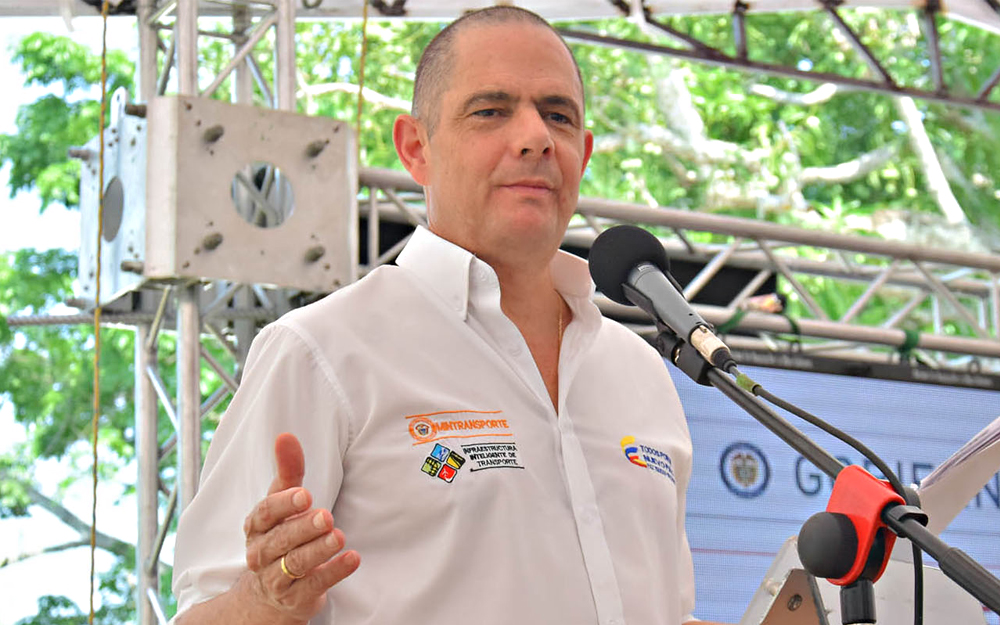
Vargas Lleras has managed to combine his networking and cross-Ministry experience to protocol-wise handle multiple initiatives. Photo (c) Las Illa Vacia 2016
As Vice President, Vargas Lleras manages to combine his networking and cross-Ministry experience to protocol-wise handle multiple initiatives of which he had previously worked - including public housing, municipal water, Senate hearings and investigations - including against the Uribistas - and promote the Peace Process on the national level. Contrary to a (in)famously radical, vocal past, Vargas Lleras appears to recognize the potential tenuousness of keeping positions (i.e. Galan assassination, two assassination attempts and Ministry of Living), as well as how far he has come now (being VP), thus toning down the at least public vehemency. However, neither Vargas Lleras’ s style staunch Santos, thus leaving the door open to future alliance flexibility - nothing strategically new.
- Conclusions and Future Presidency Prospects:
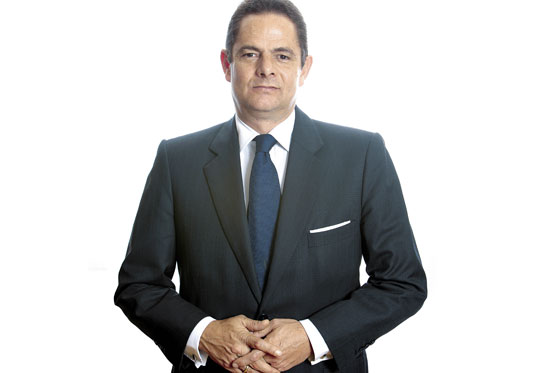
Vargas Lleras’ vehemency is slowly returning, more powerfully postulating himself as a connected blue blood with “connections” to the populous. Photo (c) Cromos 2014
With Santos’ second and final term coming to an end, as well as the failed but Nobel Peace Prize winning FARC-govt peace negotiations, talks of Santos’ preferred candidate are cooking. Ex-Vice President to scandal-accused Colombian President but revered UNASUR Secretary General Ernesto Samper and Colombian government negotiation team leader Humberto de la Calle has also been rumored to be a top pick. Vargas Lleras’ classic tenacity is slowly returning, more powerfully postulating himself as a connected elite with “connections” to the populous, as well as a dragon matured by the years but with still fire to blow.
However, full-blown progress may be troubled by health complications, including brain complications suffered mid-speech which required surgical removal of a tumor and several months off the job. Vargas Lleras - currently sporting a shaved head and war-medal surgical scar marks - substantiates that health is not an issue, hence once again keeping as many doors to as many alliances and as many opportunities as possible.

