

Outspoken Colombian Ex-President Alvaro Uribe’s call for civil resistance against the Santos government-FARC peace process in Havana during its final stages must be interpreted through various contextual circumstances, principally via economic, political but perhaps most importantly a leadership psychoanalytical lens.
Why Stop While the Going Is Good?
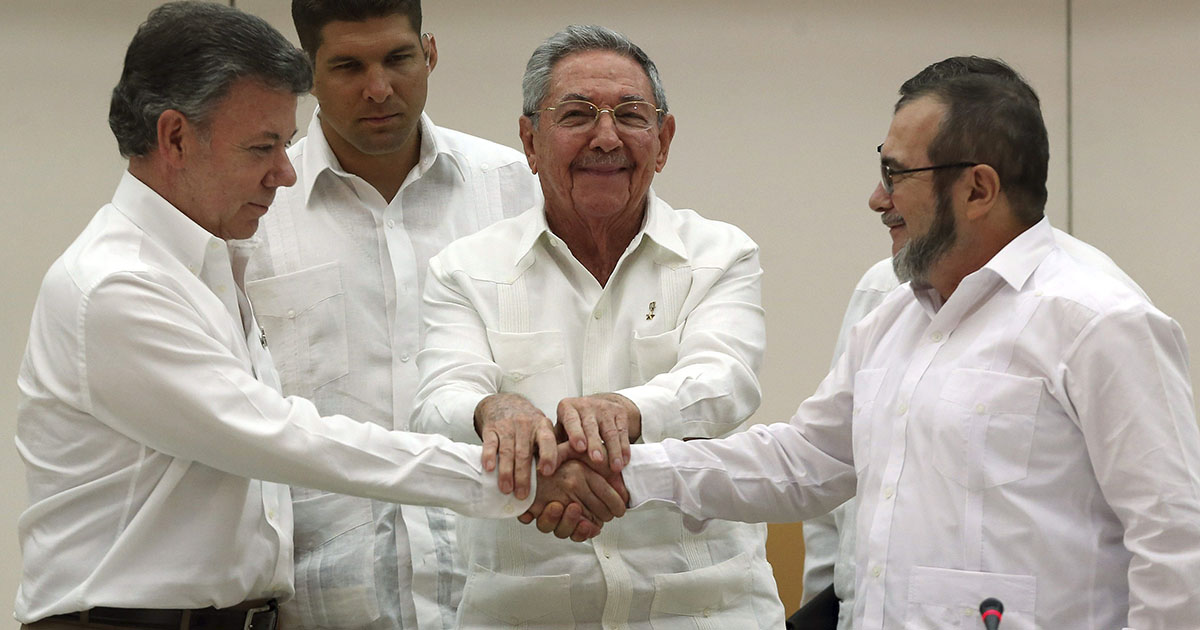
The accord would reinvent a Colombia where the FARC is a legitimate political body and its former members inducted into theoretically un-armed civilian life, as well as certain agricultural reforms. Photo (c) La Semana 2015
The first circumstance refers to the current Senator’s preoccupations regarding the future operation of the Special Court of Peace agreed between the “Peace Delegations” of the leftist terrorist organization - the FARC - and the national government. This process involves the Commission of Truth and of course, new nationwide institutional adjustments.
The accord would reinvent a Colombia where the FARC is a legitimate political body. Former members would also be inducted into theoretically un-armed civilian life, as well as certain agricultural reforms.
Meanwhile, Uribe and his followers - aka “Uribistas” - have made careers out of a destabilized Colombia. How willing are they to end it?
Smoke and Mirrors
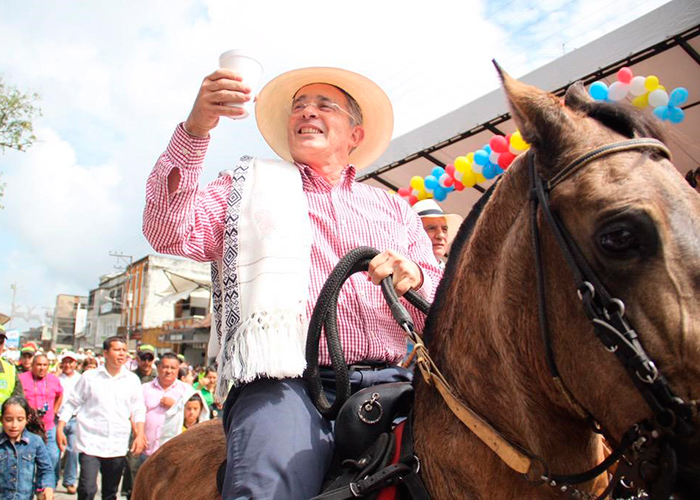
Influential Uribistas’ collective interests are at risk by the new economic, social and cultural realities that a post-conflict era would impose. Photo (c) Las 2 Orillas 2015
Regarding this final point, Uribe - as a multi-millionaire agriculturist, career lawmaker and landowner - is in the position to be rationally concerned about the viability of commerce and the interests of his allies in the cattle-breeding trade.
More precisely, their collective interests stand at risk by the new economic, social and cultural realities that a post-conflict era would impose in territories where Uribe and his associates have historically de-facto governed, albeit occasionally through direct and indirect forces.
However, it is when extreme responses decrease such rational appeal that additional opposition may rise.
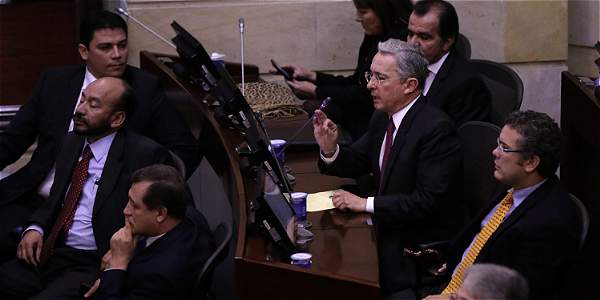
Call it Politics 101. But there’s more. Photo (c) El Tiempo 2016
The second circumstance is associated with events which again involves members of Uribe and other elite, right-wing local individuals; especially the appearance of their children’s names in the recent Panama Papers.
Therefore, it is also plausible that Uribistas’ years-long anti-Santosisms have utilized this “papayazo” to generate a large enough smoke curtain to try to hide the private financial maneuvers that clearly call into question respect for national standards concerning the availability and management of economic resources in so-called “tax havens”.
Now let’s put aside these two circumstances and look for what the position taken by Uribe is when civilly resisting the peace process.
Politics 101

Simply Uribe’s way to rile up populous resistance against Santos, a former Uribista “gone rogue”? Photo (c) Libertad Digital 2010
First, critics of the Uribista peace process criticism campaigns have called the ex-president’s following “flashy, red herring spectacles”and for many of enormous cynicism, that’s just Uribe’s way to rile up populous resistance against incumbent President Juan Manuel Santos, a former Uribista “gone rogue”.
Uribista policies have previously resulted in the persecution, stigmatization, acceptance, financing and inflicting of the murder and violation of the rights to those who dare give political opposition. Photo (c) Radio Macondo 2009
Meanwhile, it is vital to remember that as president, head of state, supreme commander of the armed forces and responsible management then national intelligence agency the Administrative Department of Security (DAS), policies during Uribe authority have previously resulted in the persecution, stigmatization, acceptance, financing, violation of rights and murder of those who dare give political opposition in those days that through Uribista “democratic security policies”, called “plainclothed terrorists” to all those who criticized said administration’s decision as a governing body or simply were leading community processes, pacific or otherwise.
Furthermore, it was precisely during both Uribe presidencial administrations (2002-2010) when government oppression of indigenous and peasant movements that made civil resistance against the imposition of the FTA with the United States where made, and on the occasion of “environmental policy” with which top Uribista officials handed right and left exploration licenses to local and foreign mining and oil drilling corporations, meanwhile jeopardizing the lives of civilian indigenous, afros and peasants.
Seguridad Democratica
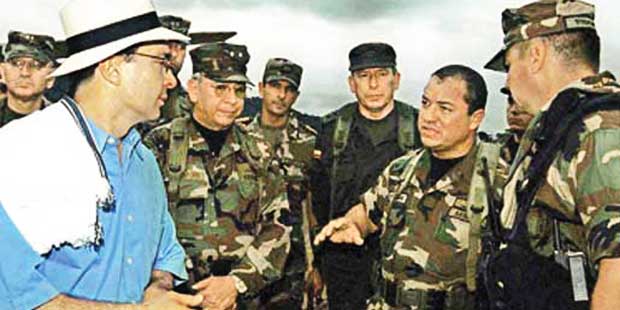
Opposition allegations point to Uribista connections and shared concerns with armed NGOs . Photo (c) Adital Brasil 2003
Third, the extremity to which Uribism has remarked its position is debatably dangerous to the extent that the maintenance of such peace process antagonism will - in a hypothetically effective post-civil war Colombia - hypothetically may open doors for paramilitaries and criminal gangs to rise to support their position and political action, since Uribe is connected and shares concerns with these armed NGOs about what might happen in the field after the end of the conflict is signed in Havana and the implementation phase of the agreement between the government and the FARC Santos starts.
It would possibly make civil resistance, the emergence of illegal armed groups clearly opposed to the new state-society relations and market expected to be generated in the post-conflict.
On the contrary, if the peace process were to ultimately fail, promoted Uribista civil resistance would regain space and legitimacy with which today it no longer counts.
Walking On Eggs
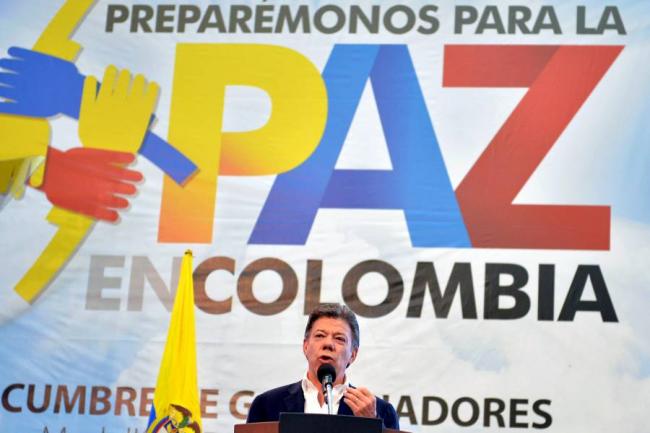
The Santos administration has offered strategic rhetorical hints to providing democratic “guarantees” for the former president and senator. Photo (c) Vanguardia 2014
Looking ahead, the FARC Peace Delegations and Government are required to overcome the Gordian knots that today have slowed the full public acceptance of the Final Agreement to end this more than a century long armed conflict.
Meanwhile, the Santos administration has given strategic rhetorical hints to providing guarantees for the former president and senator. Such includes that he and his supporters may continue to freely and democratically exercise their actions of resistance.
Hence there is no social and political movement that gives greater legitimacy to civil resistance proposed by the politician yore.
Hard to Break Old Habits
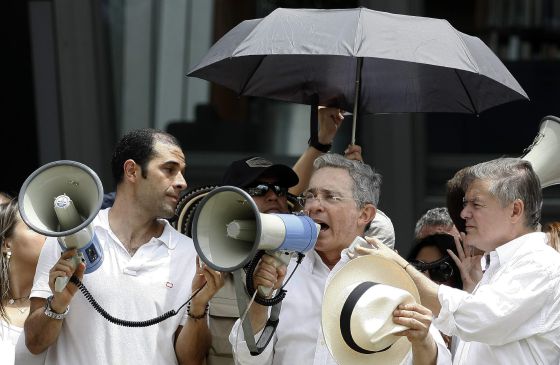
Uribe will likely continue to represent those pre-modern, post-Operation Condor, anti-Pink Tide niche. Photo (c) Caracol Noticias 2015
Overall, the hints insist that publically-projected Uribe exhibits a messianic character that prevents him to continue promoting a political project of national scope which seeks to consolidate the state as morally superior to their associated order.
Hypothetically, Uribe may continue to represent those pre-modern, post-Operation Condor, anti-Pink Tide niche that through legal and illegal activities, have historically reached the State to submit to private institutions, allies abroad, landowners and farmers who are reluctant sharing prosperity and above all being tucked in to a populous majority.

