
Everyone wears the shirt. The woman on the moto coming by, the man selling avocados: there are no exceptions. Uniform is suspended for the day, so are lessons and work, as the country gathers in front of the TV. You don’t need to ask when the football’s on, you see it in the street. There’s no excuse not wear the shirt.
Strung between lampposts are hundreds of jerseys. Daffodil-yellow, polyester, they move in the wake of the traffic. The knock-offs are on the left, the finer knock-offs on the right. And after a week, the slogan peels off your sleeve. Plenty of shirts are torn. Some are so ancient they read ‘Falcao’. As the match begins, a man pulls up in a battered car with speakers in the boot. The crowd dances through the pre-game chat. Águila is sold by the crate. James kicks off to Bacca.
Uniform is suspended for the day, so are lessons and work, as the country gathers in front of the TV. Photo (c) Telegraph 2016
Everything about a country is contained in its football commentary. Norway’s Bjørge Lillelien, or Iceland’s Guðmundur Benediktsson, show a madness hidden outside sports. Britain is someone posh explaining to the masses. It’s why Colombians hate English commentary: it’s soulless, they say, it dampens good goals, the way they pronounce ‘Cuadrado’ is obscene. Besides, they always sound depressed, they talk how their team plays.
Colombian commentary is a volatile thing. When Javier Fernández Franco calls on the nation, the roar from your neighbours sounds through the wall. And like all pride, it’s closer to shame than you think. Colombians know their reputation. They know that, for many, Colombia means cocaine. Their unofficial ambassador has his own Netflix series: the mention of Colombia can raise the dead from a Medellín rooftop.
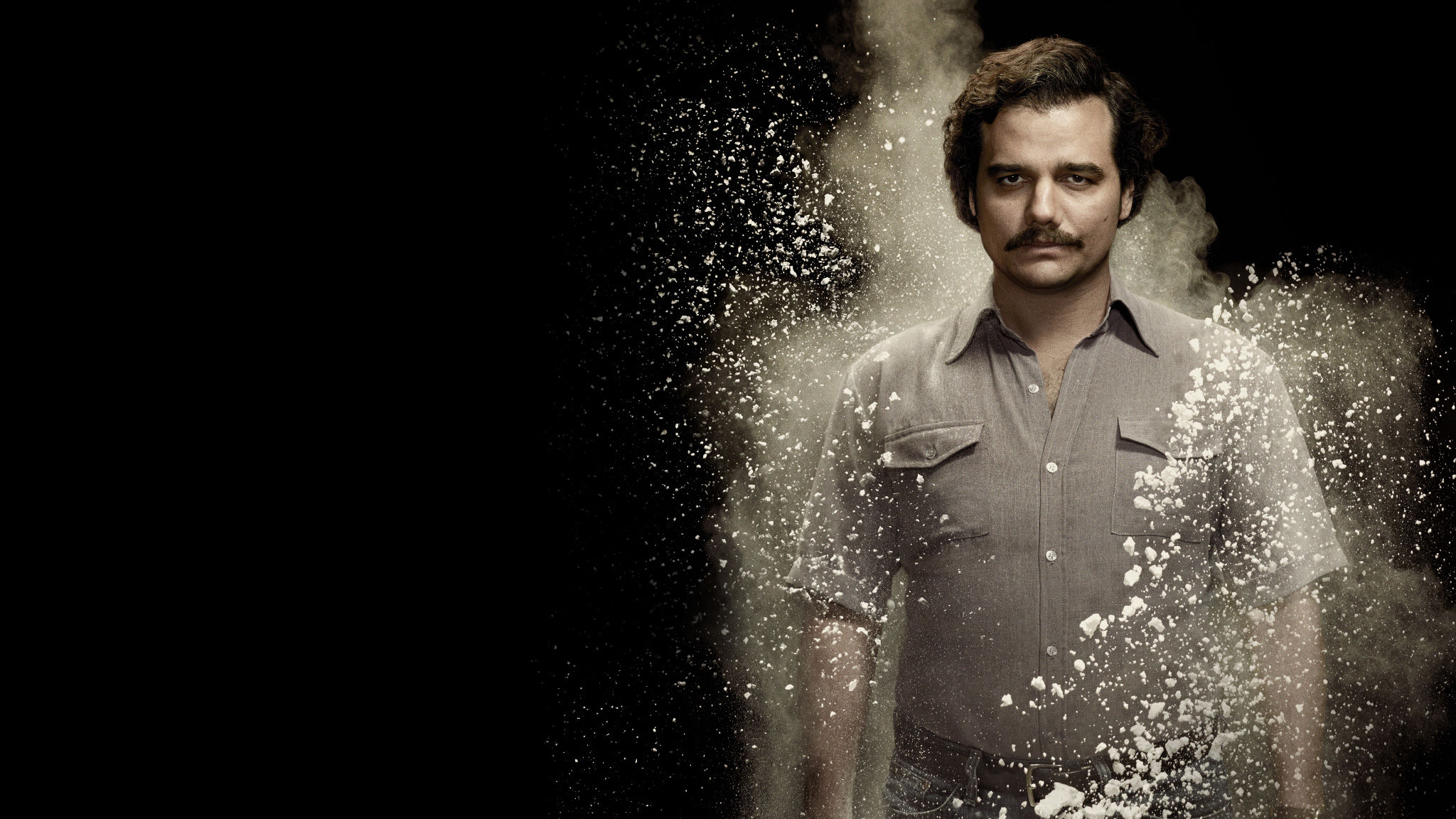
Colombians know their reputation. They know that, for many, Colombia means cocaine. Their unofficial ambassador has his own Netflix series. Photo (c) Netflix 2016
And there’s another Escobar. On June 22nd 1994, Andrés Escobar Saldarriaga scores an own goal against the USA. Not a freak own goal, certainly not an intentional one; a normal, embarrassing, dozen-a-season mistake. Ten days later he is murdered by the cartels.
The 2016 Copa America Centenario opened with a match between the US and Colombia; the match for third place was the same. There were tributes nationwide, and on the sofa next to me, the family went quiet. Someone raised a can. It was a small toast, and it was enough.
The 2016 Copa America Centenario opened with a match between the US and Colombia; the match for third place was the same. Photo (c) The 18
Colombia won both games, the first in triumph, the second with a little resignation. They’d hoped for the trophy, but ten minutes of Chile snuffed them out. The weather made half-time into three hours. When the hailstorm cleared, they’d lost.
If you’re feeling glib, there are jokes to be made this morning about England going out of Europe, but the UK isn’t the only country where politics mirrors football. In Colombia, Brexit was sent to the back pages; this week peace between the government and FARC was at last signed. And I hope it isn’t equally glib - but I suspect it isn’t nothing that a country with such a history, in football and elsewhere, accepts an honour knowing that it isn’t perfect, and that it will involve a lot of work in future.
