
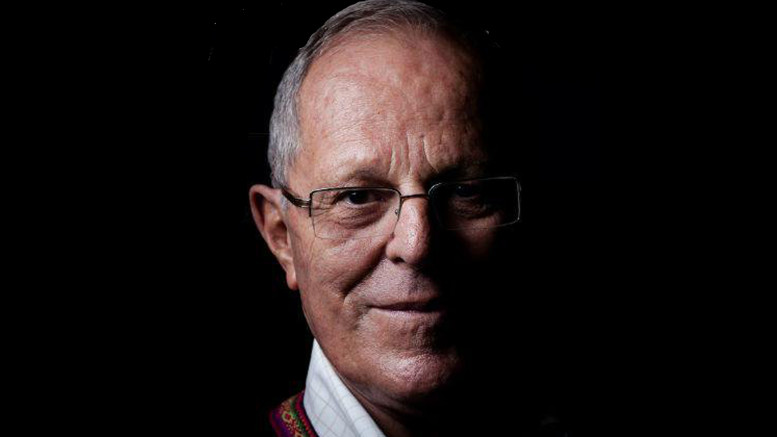
While many are relieved that fascist Fujimorism will not return to the Peruvian Presidency (at least for now), it is equally crucial to analyze what newly elected President Pedro Pablo Kuczynski (commonly known as “PPK”)’s leadership implies - past, present and future.
World Bank senior economist PPK has won the majority of votes in the tightest presidential elections in Peru for the past 54 years, rising from just 14% of the votes in the Primer Vuelta (“first round”).
However, four days after the election, the National Office of Electoral Processes (ONPE) announced the electoral records had been processed at 100% and Kuczynski won 50,121% of the votes compared to 49,879% achieved by Keiko Fujimori - former First Lady and daughter of jailed former President Alberto Fujimori (1990-2000). Alberto Fujimori is currently sentenced to 25 years in prison for murder and corruption.
Who is the man behind this quick rise? The implications following change of leadership in any country are significant. The political course Peru has embarked upon for the next five years will no doubt be a defining addition to South America’s current economic-political era of transition from populism to returning right-wing modus operandi.
Who Does The Change Serve? The Past Sheds Light.
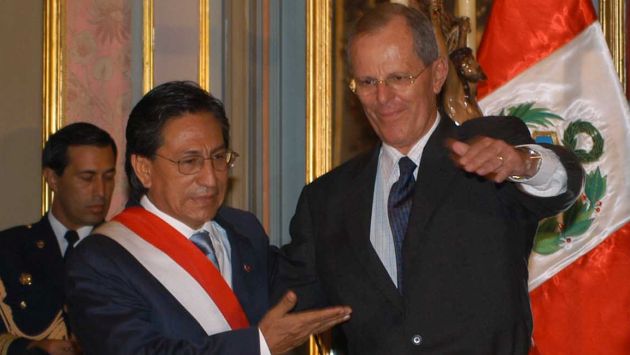
PPK has occupied numerous powerful positions at home and abroad. Photo (c) PERU 21 2001
Pedro Pablo Kuczynski has over 40 years experience as a banker, is a multi-millionaire mining entrepreneur and draws close ties to the Central Reserve Bank in Peru, the World Bank, Wall Street and the International Monetary Fund. He was Minister of Energy and Mines in Peru in 1980 and Prime Minister between 2001 and 2006 in the right-wing government of President Alejandro Toledo. While PPK originates from a left-leaning family background and a right-wing professional background, he considers himself centrist.
With studies from Oxford and Princeton, Kuczynski has been president of US bank First Boston International which is now part of Credit Suisse Group AG. During his tenure, Kuczynski facilitated neoliberal privatizations in Latin America, worth more than $ 7 billion.
In 1992 he co-founded a private investment fund based in Miami, the Latin American Enterprise Fund. Today he continues to serve as senior advisor to these institutions, including as fund manager of Rohatyn Group, based in NYC.

PPK denounced Peruvian citizenship in order to work in the US financial world. Photo (c) Financial Times 2003
PPK was also an American and Peruvian citizen. Because US law prohibits foreign nationals from directing US banks, PPK resigned his Peruvian citizenship in 1982 upon assuming office in First Boston Int. At that time, there was no agreement on dual citizenship between the US and Peru. In preparation of Peruvian presidential elections, PPK renounced his US citizenship last year.
As Pervian Economic Minister, PPK helped impose neoliberal economic models inspired by Wall Street bankers and the Chicago Boys. This model included a Free Trade Agreement with the United States. The FTA also had the national government sign an agreement in 2005 with the Paris Club of creditor nations to pay $ 1.55 billion of debt.
Not Alone

Kuczynski is a very powerful politician who represents US and European economic interests. Photo (c) IMGUR 2004
Kuczynski is a very powerful politician who represents US and European economic interests, joining other garden-variety center-right to right wing leaders such as Varela, Santos, Cartes and Macri.
It is a similar case to ex-president Alejandro Toledo (2001-2006), who currently resides in the US, married to an American of Belgian origin, has been “educated” in very expensive universities and has funded NGOs, including that of George Soros.
Ironically, this is also the case of his opposition, Keiko Fujimori, daughter of Japanese and married to an American immigrant, “educated” in the US with Peruvian tax money and her criminal father, who came to the Peruvian presidency with minimal initial Western opposition.
But Not So Simple
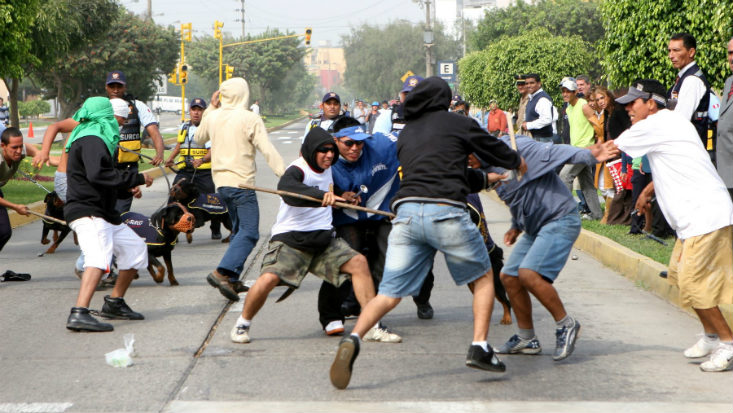
Insecurity, ideological polarities, and other socio-economic related issues are just some of the issues PPK’s administration will face. His predecessors Presidents Ollanta Humala (2001-2016) and Alan Garcia (2006-2011) left office burdened by low approval ratings due to difficulties in dealing with such rampant affairs. Photo (c) Semana Economica 2016
Regardless of riding the wave of the right profiting from a troubling fall of the left, few things are givens.
Like PPK’s contemporaries, such as Macri of Argentina and the potentially pending right-wing victors in Bolivia, Brazil, Ecuador, Uruguay and Venezuela, Kuczynski faces the challenge of leading a government without a parliamentary majority. As is the case for Panama’s Varela and Venezuela’s Maduro administrations, the new leader will have to govern amid a parliamentary controlled by the Fujimori Congress.
It is a complicated picture for this 77 year old economist with minimal charisma yet links to large groups of economic power. He has reached the presidency by a combination of factors, including those who remember Keiko Fujimori’s father’s authoritarianism. Ironically, despite powerful international alliances, this government starts weakly.

