

The Community of Latin American and Caribbean States (CELAC) and the European Union (EU) set “building a common future” as the theme of last Wednesday’s summit. Set in Brussels, Belgium, the event was attended by 61 delegates and dozens of heads of state, foreign ministers and ambassadors.
Several attending Latin American leaders included Presidents Rafael Correa (Ecuador) Enrique Peña Nieto (Mexico), Juan Carlos Varela (Panama), Ollanta Humala (Peru), Michelle Bachelet (Chile), Juan Manuel Santos (Colombia), Evo Morales (Bolivia), Horacio Cartes (Paraguay), Luis Guillermo Solis (Costa Rica), Dilma Rousseff (Brazil), and Foreign Minister Héctor Timerman (Argentina) among others.
Trade, cooperation, higher education, science, technology, travel permits and an earmarked 26.5 million Euros for the first fiber optic directly linking Europe and its former colonies captured mass media’s attention. Yet how are individual Latin American countries effected - or not - by this landmark international affair?
Below is a brief Latin American country-by-country synopsis of some of their highlights :
ARGENTINA: Falkland Islands / Islas Malvinas
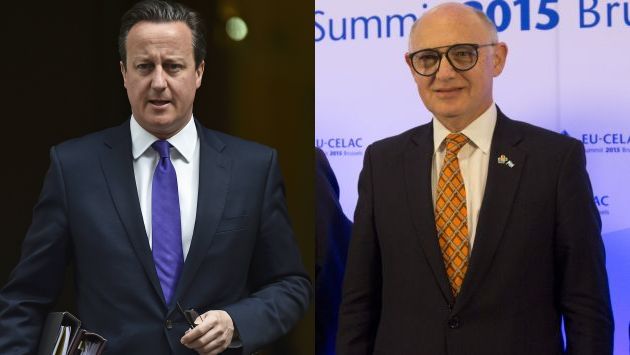
Timerman lashed out at Cameron regarding UK “occupation” of the Falkand Islands / Islas Malvinas, substantiating Argentina’s classic argument for anti-imperialism and sovereignty. In turn, Cameron described the comments as “threatening” and un-founded by international law. In this photo: Cameron (L) and Timerman (R). Photo (c) Peru 21 2015
Argentina maintained a firm presence at the CELAC-EU summit despite President Cristina Fernandez de Kirchner’s noted absence. As for the thorny issue with the British occupation of the Falklands / Malvinas Islands, substituting Foreign Minister Héctor Timerman fluently translated his boss’ stance. Through this, he lashed out at UK Prime Minister David Cameron regarding UK “occupation” of the Falkland Islands / Islas Malvinas, upholding Argentina’s classic argument for anti-imperialism and sovereignty. In turn, Cameron described the comments as “threatening” and un-founded by international law.
Regardless, Argentina has declared itself “satisfied” with the even which synthesized the need to protect debt restructurings and respect the territorial integrity of States, citing support from other Latin American nations’ over sovereignty stances.
COLOMBIA and PERU: Shengen Visas
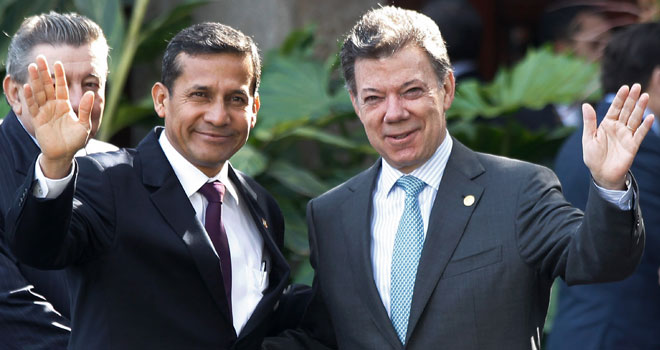
Colombia and Peru are among the victors of the CELAC-EU summit. (In this photo: Ollanta (L) and Santos (R) . Photo (c) Star Media Latinoamerica 2014
Colombia and Peru are among the victors of the CELAC-EU summit. Supporting Colombia’s pending post-conflict era, the EU has ended Schengen Visas for its (as well as Peru’s) citizens. The elimination permits Colombians and Peruvians to travel throughout 26 European countries with a 3-month turist visa granted upon arrival.
CUBA: Stronger EU Trade and Diplomatic Ties
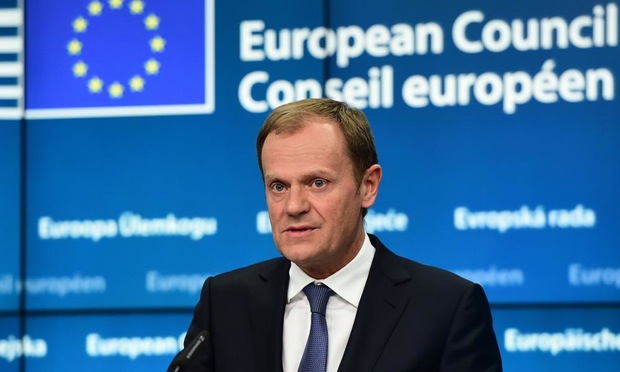
Tusk: EU is “closer to bilateral agreements with Cuba and hopes to normalize relations”. Photo (c) The Guardian 2015
President of the European Council, Donald Tusk, expressed at the beginning of the EU-CELAC summit that the EU was “closer to bilateral agreements with Cuba and hopes to normalize relations”. Tusk continued that the EU “supports the modernization of Cuba” and that they “are committed to concluding our negotiations of an agreement on political dialogue and cooperation”.
Cuba emphasized that while both regions have very different realities, there are areas of common interest. Strengthening this point, it called to fortify cooperation between universities of CELAC and the EU.
ECUADOR: CELAC Presidency and Voice
Ecuador’s President Rafael Correa spoke in Brussels as CELAC’s acting President. Photo (cc) Youtube 2015
Ecuador’s President Rafael Correa spoke in Brussels as CELAC’s acting President. Among his emphasizes was to “carry out the voice” of absent leaders at the summit. Those absentees included Presidents Nicolas Maduro (Venezuela; who stated that an ear infection made him unfit for travel), Cristina Fernandez de Kirchner (Argentina), and Raul Castro (Cuba). This broad representation was particularly voiced on the Venezuelan crisis.
VENEZUELA: Crisis Managment
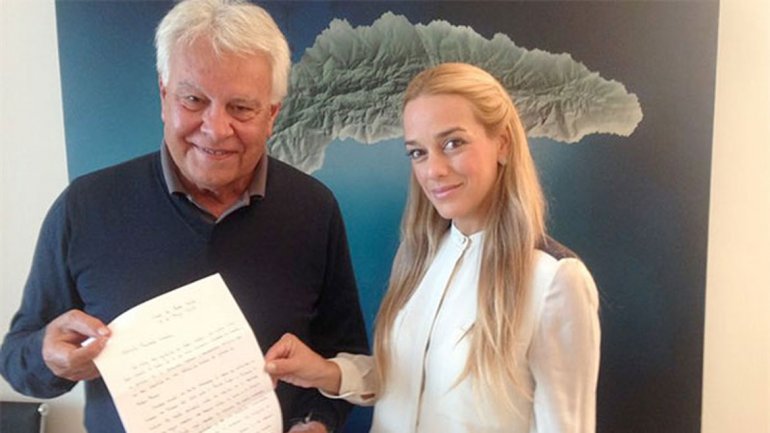
Socialist former Spanish Prime Minister Felipe Gonzalez with right-wing Venezuelan opposition leader Leopoldo Lopez’s wife, Lilian Tintori. Photo (c) Caraota Digital 2015
Venezuela’s current economic, political and social state inspired powerful opposing positions during the CELAC-EU summit. On one hand, various European representatives are concerned about the deterioration of freedoms in the country - especially the imprisonment of prominent opposition leaders.
Former Spanish Prime Ministers Felipe González and José María Aznar have also expressed fire brand styled opposition for the Bolivarian government’s crisis management, González recently going even as far as to visit Caracas and speak with anti-government individuals. He requested visitation rights to jailed opposition leader Leopoldo Lopez, but was officially denied. This was not the first time that right-wing foreign ex-heads of state were prohibited by the Maduro administration. Nor has it been the last of Western leaders’ criticism of it.
“I cannot understand that Felipe González - of the Socialist Party - tried to go to Venezuela to visit one of the extreme right,” Bolivarian President Evo Morales has processed aloud.
Yet current Spanish Prime Minister Mariano Rajoy rebuked, supporting the efforts of his predecessor. “We want the same for Venezuela as we want for Spain: democracy, freedom, human rights, rule of law, progress and prosperity”.
Meanwhile, many center-left to leftist Latin American states rejected such external “interference”. Consequentially, they have demanded an express condemnation of United States sanctions on Maduro’s Venezuela.
“We demand repeal of the executive order of US President Barack Obama for imposing unilateral sanctions on Venezuela for allegedly constituting a threat to its (US and local) national security,” declared Correa.
URUGUAY: Trade Diversification Beyond MERCOSUR
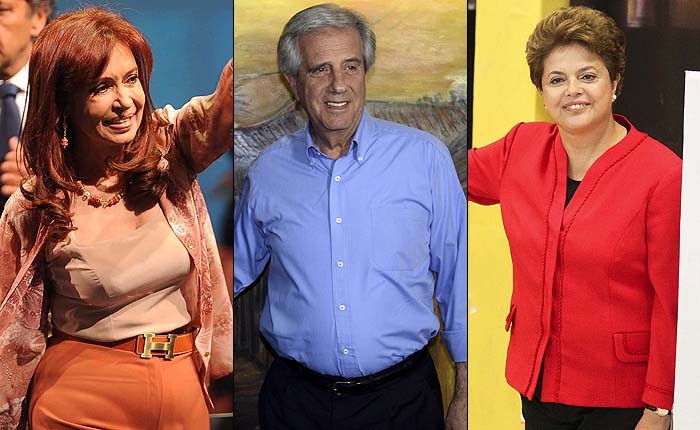
In this photo: Fernandez de Kirchner (L), Vasquez (C) and Rousseff (L). Photo (c) An Digital Argentina
Uruguay has been anxious to expand trade relations beyond Argentina-slowed Mercosur long before this CELAC-EU summit. The situation has encouraged President Tabaré Vásquez to push for a Free Trade Agreement with other global trade partners, including the EU. With this policy, Vice President Raul Sendic and Foreign Minister Rodolfo Nin Novoa traveled to Brussels in hopes of advancing these negotiations.
While Brazil’s President Dilma Rousseff has pushed for unity in Mercosur’s advancement, Nin Novoa agrees, but to the extent of which states can advance “at different speeds”, a view only appropriate for a region of varying levels of crisis and convolution.


