
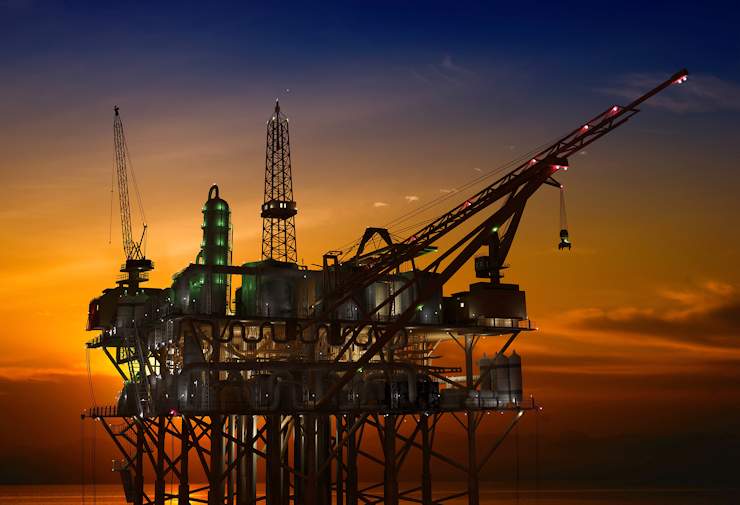
The US oil company Exxon Mobil’s has discovered oil in Guyanan territory claimed by Venezuela. The finding is part of a Stabroek Block field exploration, located approximately 200 kilometers (120 miles) off the coast of Guyana. Guyanan Minister of Environment and Natural Resources Robert Persuad indicated that a full evaluation is underway by the company to determine the scope of discovery. But what about the scope of economic and international relations implications?
“We are optimistic that the discovery of oil profoundly transform Guyana’s economy,” added Persuad. The Minister is conscious of the small South American republic’s developmental struggles which leaves much to improve. Sharing the same coast of an oil rich neighbor, if the new found oil - a potential key to national growth - cannot be accessed due to a centuries long territorial dispute, will Guyana’s future as a further developed nation remain but a dream? If there is enough to gain on Exxon’s part, will this territorial dispute intensify? Could we soon witness a private corporation and state clash in hard times for Guyana and Venezuela alike?
Exxon Mobile’s involvement
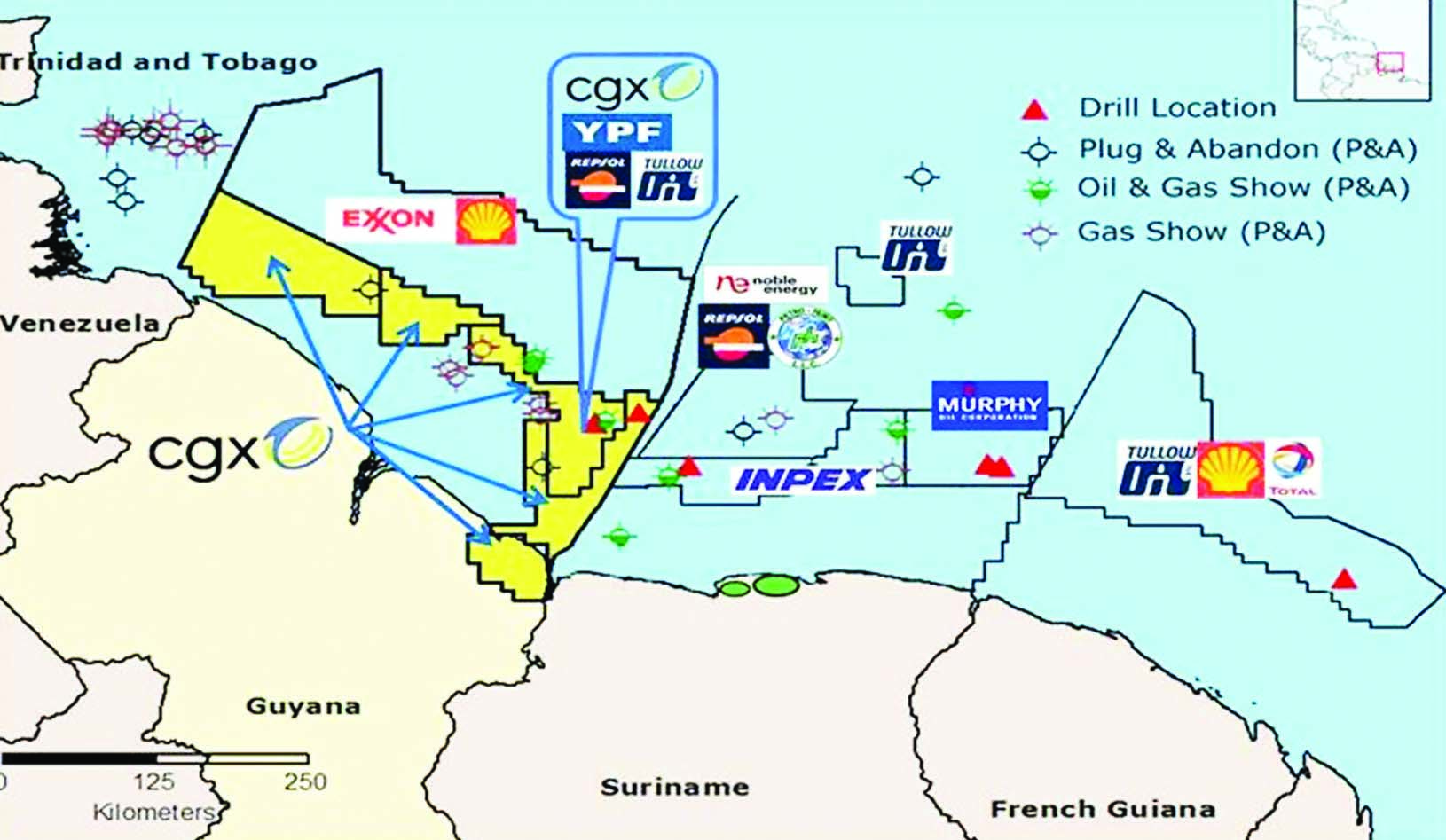
The Stabroek Block Field has been recognized by the US Geological Survey as the second largest area in the world with oil unexplored. As of last March, Exxon has began mining operations here through a proposed $200 million mission that is expected to last for 10 years. Photo (c) Guyana Times International 2010
In 1999, the US company agreed with the Guyanan government to explore 26,800 s square kilometers of the republic’s coast. This range includes former Dutch colony Essequibo, an area under dispute with neighboring Venezuela. Essequibo comprises of 159,500 square kilometers of territory rich in mineral resources and strategic sea area rich in energy resources. It is also a boundary technically delimitated about 200 years ago. However, to this day, many Venezuelan maps continue to mark it as a “Reclamation Zone”.
It is also noteworthy that the surrounding Stabroek Block Field has been recognized by the US Geological Survey as the second largest area in the world with oil unexplored. As of last March, Exxon has began mining operations here through a proposed $200 million mission that is expected to last for 10 years. This move is despite the warnings of Caracas authorities to Georgetown to interrupt the oil search in an area debatably Caracas-claimed, inspiring skepticism in a Venezuelan administration already untrusting of Western corporate interests in the continent.
Venezuelan Foreign Minister Delcy Rodriguez has also asked by letter to the oil company to interrupt the search for fuel because it could cause untold environmental damage. The nation hosts a massive wildlife diversity, including numerous undiscovered and endangered species. Hosting one of the continent’s largest unspoiled rainforests so recognized that early explorers including Sir Walter Raleigh and UK naturalist Sir David Attenborough have featured it, it’s unspoiled state is more due to lack of infrastructural means rather than tourism-motivated preservation efforts.
But certainly, all party’s concern for the territory dispute long supersedes environmentalism.
Origins of dispute
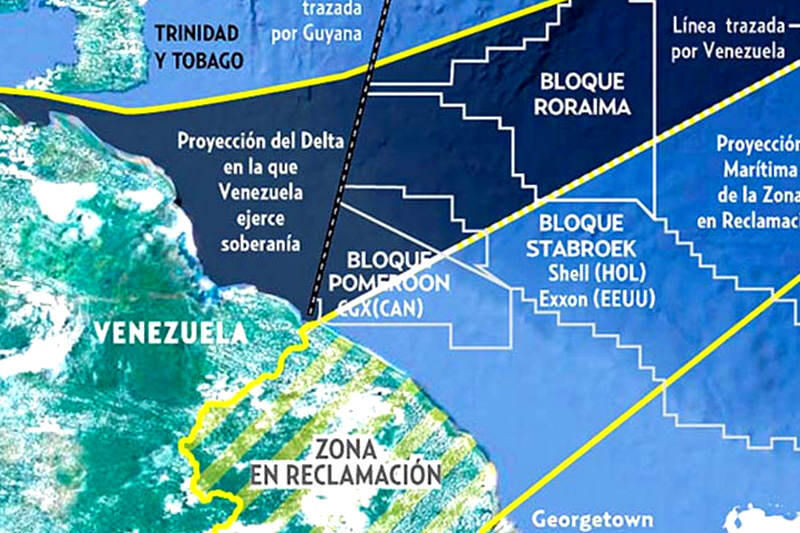
That is why the claim to Essequibo now becomes more important. Not only is historical land and sea up for debate, but natural resources. Photo (c) Maduradas 2015
Yet Venezuela’s concern with the controversial Guyanan territory dates long before oil discovery. In fact, its border problems began when it separated from Gran Colombia during the early 19th century War of Independence against Spain. Then came the problems with Britain (then an authority over Guayana) and the Essequibo area - a dispute now inflamed by its new-found oil potential.
That is why the claim to Essequibo now becomes more important. Not only is historical land and sea up for debate, but natural resources.
This balance of interests in the historical and the modern industrial is not a new one. Argentina and the United Kingdom have prolonged interest over the now oil-tested Falkland Islands / Islas Malvinas. Bolivia and Chile also continue to battle neighboring Chile for gold rich regions lost during a bloody early 20th century war.
If history repeats itself, only time can tell if Essequibo will join this list.

